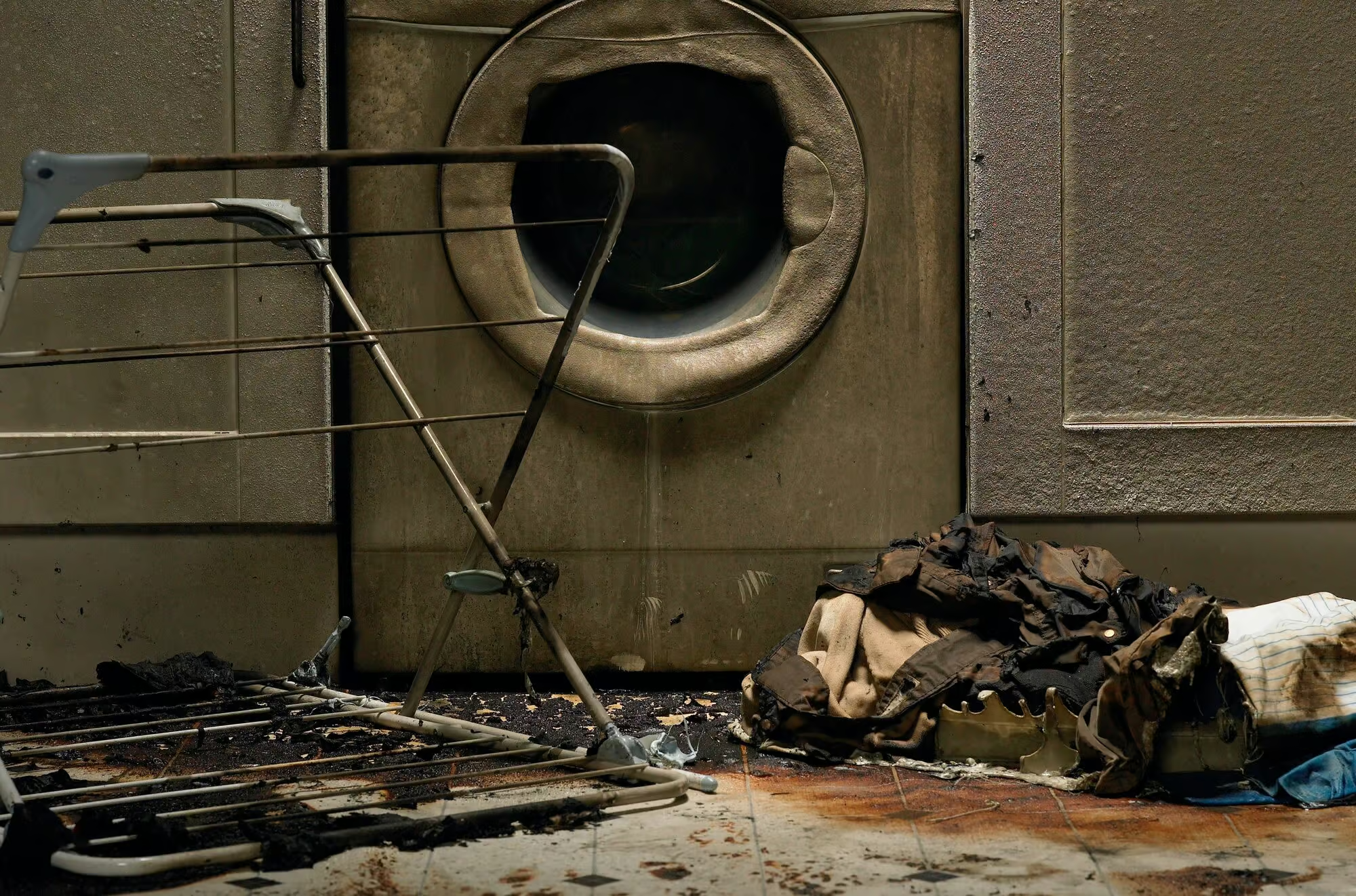
Owning a home that’s been damaged by fire is heartbreaking on numerous levels. The emotional shock, the financial burden, and the complexity of restoring or selling a damaged property can leave homeowners unsure of what to do next. If you are facing this situation in Washington State, it helps to understand your options, your legal responsibilities, and the steps you can take to move forward confidently.
This guide explains the process step‑by‑step, including local legal requirements, cost considerations, and selling strategies including the fastest potential route to get cash for your fire‑damaged house.
Home fires are more common than many people realize. Across the United States, fire departments respond to hundreds of thousands of residential building fires each year. In 2023, the U.S. Fire Administration estimated that fire departments responded to more than 344,600 residential building fires nationwide, with cooking being the leading cause.
The Washington State Fire Marshal’s Office reports that fire incidents are consistently tracked across hundreds of agencies statewide, and structure fires are a major category of those incidents.
While statewide numbers can vary from year to year, tens of thousands of structures are impacted by fire annually, and a significant share of those are residential properties.
Some of the most typical causes of residential fires include:
These fires can result in damage that ranges from superficial smoke and soot issues to complete structural loss. Understanding the extent of your damage is a key first step before deciding whether to repair or sell.
Experiencing a house fire is deeply stressful. Beyond financial loss, homeowners often feel grief, disruption, and anxiety about what the future holds. It’s normal to:
Acknowledge these feelings before moving forward. Talking with trusted friends, family, or even a counselor can help you make levelheaded decisions. Making big financial choices while still processing the trauma of the fire can lead to regret or rushed decisions.
In Washington, sellers must disclose known material defects in a property when selling. The state’s Seller Disclosure Act (RCW 64.06) requires sellers to provide accurate information about the condition of the property, including whether there has been fire damage. Washington’s standard disclosure form — often called the Form 17 Seller Disclosure Statement — specifically asks about material damage like fire.
This means that even if repairs were made, you must disclose that fire damage occurred so buyers can make an informed decision.
Failing to disclose material facts related to fire damage can expose you to legal liability, contract rescission by the buyer, or financial damages later. Transparency protects you and the buyer.
As part of the insurance process after a fire, Washington requires insurers to report fire losses to the state patrol and insurance commissioner following RCW regulations, which ensures the incident is formally recorded.
Repairing a fire‑damaged house can be costly and time‑consuming. National data suggests that even what seem like moderate fire repairs can quickly escalate beyond what insurance covers. Smaller fixes may cost several thousand dollars, with the average fire damage restoration racking up $27,258 on average, but larger issues (structural, electrical, and interior work) often exceed $50,000.
Insurance policies vary significantly in how much they cover after a fire. Some policies pay for total replacement or rebuilding, but others have limits, exclusions, or require you to complete repairs within strict timelines.
Rebuilding can also take months, leaving you displaced while contractors and inspectors work. If time, money, and emotional bandwidth are limited, selling as‑is becomes an attractive alternative.
Try Our Free Home Sale Calculator →
This option can potentially result in the highest sale price, but requires:
You still must disclose the fire, even after repairs, and the buyer may demand documentation of all work and approvals.
Some real estate agents are familiar with fire‑damaged properties and can market the home to investors or buyers willing to take on repairs. You may sell without doing significant repair work yourself, but you will still need to disclose all known fire history.
Selling to a cash buyer or investor is the fastest and simplest option for homeowners who want to avoid:
These buyers specialize in properties that need work, including fire damage. They can often close in days to weeks and purchase the property in its current condition without lengthy negotiations.
Cash offers typically reflect the cost and risk of repair, so they may be lower than a fully repaired home’s market value, but the trade‑off is speed, convenience, and no repair burden.
Some distressed properties are sold via auction or through niche real estate networks. This can be fast but is less predictable in pricing.
Here’s a clear path forward:
Make sure the property is declared safe to enter by local fire officials. Collect all fire reports, inspection results, and repair estimates.
Notify your insurer of your intent to sell, and clarify coverage benefits and outstanding claims. Maintain all correspondence.
Even if you plan to sell as‑is, getting an estimate helps you and buyers understand repair costs.
Fill out the required Washington state seller disclosure form honestly, including fire history, extent of damage, and any remediation.
If you work with a realtor, you may receive multiple offers. Compare them based on net proceeds, timeline, and contingencies.
Once you accept an offer, work with your title company or attorney to complete the closing efficiently.
Yes. Washington law requires you to disclose known damage, including from fire, on the Seller Disclosure Statement. It’s considered a material fact in most transactions.
Yes. You can sell a house as‑is, including fire damage, especially to investors or cash buyers. However, disclosure of the damage is still legally required.
Generally, repaired homes attract more buyers and higher offers, but the cost and time needed for repairs may outweigh the financial benefit in some cases.
In many cases, yes, but coordinate with your insurer to ensure there are no conflicts with claim processing or benefits.
Selling a fire‑damaged house in Washington State doesn’t have to be more complicated than it needs to be. Understanding your legal obligations, the cost of repairs, and the range of selling options empowers you to make the choice that best fits your situation.
If repair costs, time delays, and emotional strain are weighing on you, a fast, fair cash offer from a trusted buyer may provide the clarity and closure you need.
At Nine8 Redevelopment, we specialize in buying and redeveloping Washington homes in the Seattle area. We handle complicated paperwork, offer a straightforward, fair cash deal, and can close on your timeline without you having to make repairs or manage contractors.
If you are ready to explore a simple cash offer and move forward on your terms, contact Nine8 Redevelopment today. We’re here to help you turn this chapter into a fresh start.
We’re here to walk you through each and every step of the process.
Request an Offer Buying and Selling